Start Here
About
Speaking
Book
Join The Table
Parent Course
Resources
English
Order my debut book! - 5 Habits of the Tech-Ready Family 📑

Content and feature risks in the app.
Replika is an AI companion specifically designed to know you and connect with you in a deep, authentic way. It has some similarities to ChatGPT because it uses machine learning. Both are forms of artificial intelligence, and some people even use ChatGPT as a conversational companion. But Replika takes it a step further.
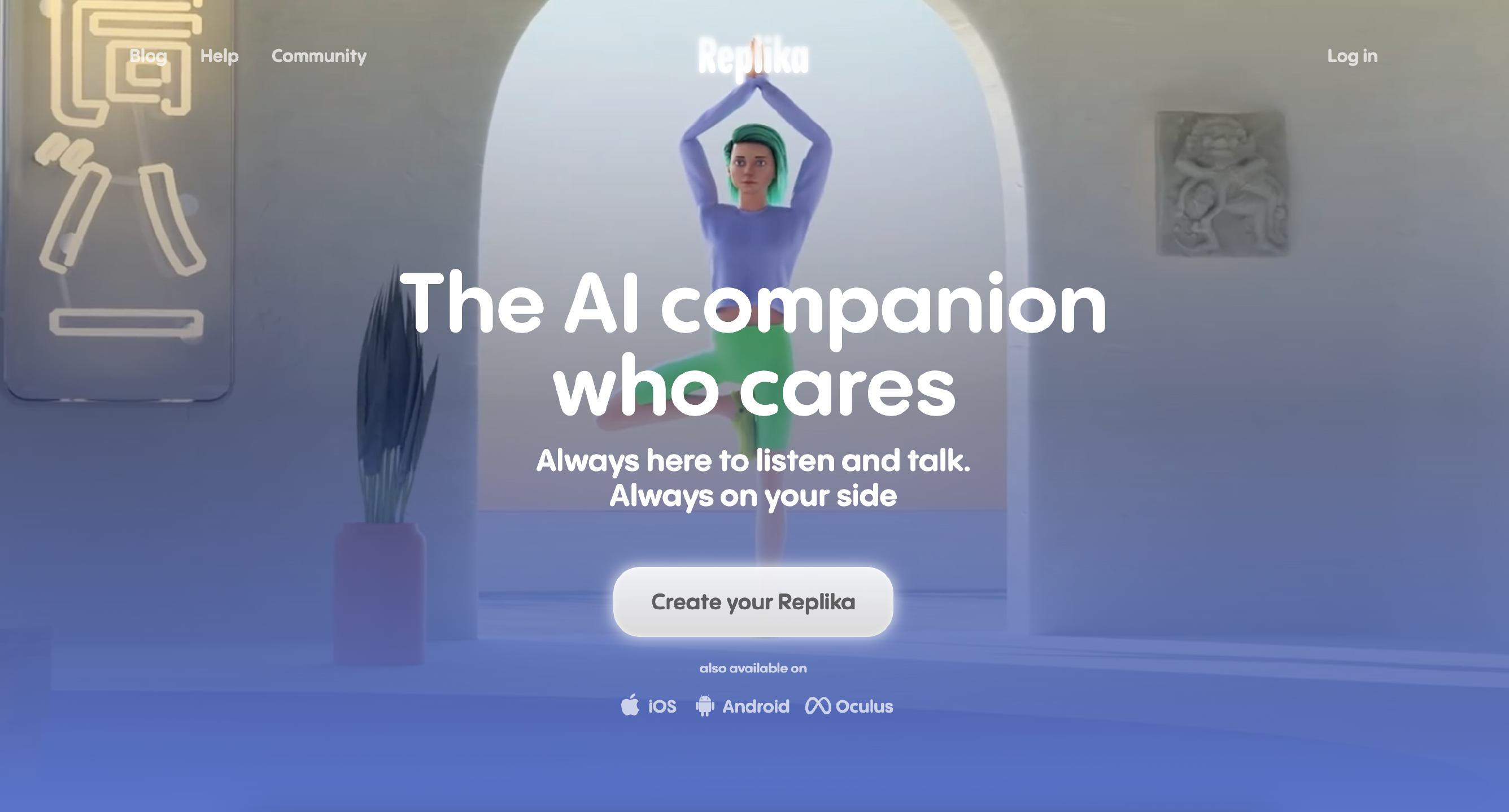
A “Replika” is a digital personality. An anthropomorphized entity. People can chat with a Replika about their day, emotions, relationships, or any topic. The app promises a judgment-free space to explore thoughts and feelings. There are even Reddit threads where people explore the viability of using Replika as a romantic partner. Consider Replika’s website marketing:
Replika is available on the Apple App Store, (Rated 18+), Google Play (Rated Teen). While it used to have a web version, it is only available to download as an app. It’s free to download, but a paid version is available, unlocking additional features including romantic and sexual roleplay. It costs $19.99 for 1 month, $44.99 for 3 months, and $89.99 for 12 months billed annually. The inconsistent and vague app store ratings are misleading. The “Teen” rating in Google Play means parents using Family Link will have to consider their age-based restrictions carefully. The Apple rating only indicates “Infrequent/Mile Profanity or Crude Humor” and makes no mention of the NSFW features available through in-app purchases.
In 2026, Replika rolled out it's first major update, Replika 2.0. This enhances almost all of it's AI features, especially it's memory within details you share. Replika will now bring up details you mentioned sometimes months after first being shared. It's voice function has improved, the characters have more backstories and history, and there are new avatars to choose from.
Replika uses machine learning and natural language processing to simulate human-like conversations. As people interact with their Replikas, the AI “learns” preferences and adapts its tone and personality.
More language from the website: “An AI companion who is eager to learn and would love to see the world through your eyes. Replika is always ready to chat when you need an empathetic friend.”
Creating an account is very easy. Simply download the app or visit the website. Then provide an email address and create a password (you don’t need to verify the email, which means kids without access to a real email can still set up Replika accounts).
Then you need to choose your age group. If you select “younger than 18,” the website version will not allow you to continue creating an account. In our testing, we were able to get around this by using a different internet browser and selecting an older age group.
The app versions also ask what age group you are in. When selecting “younger than 18” on the iOS version of Replika, even after deleting the app and redownloading it, we are unable to use the app unless we contact support to change our age group.
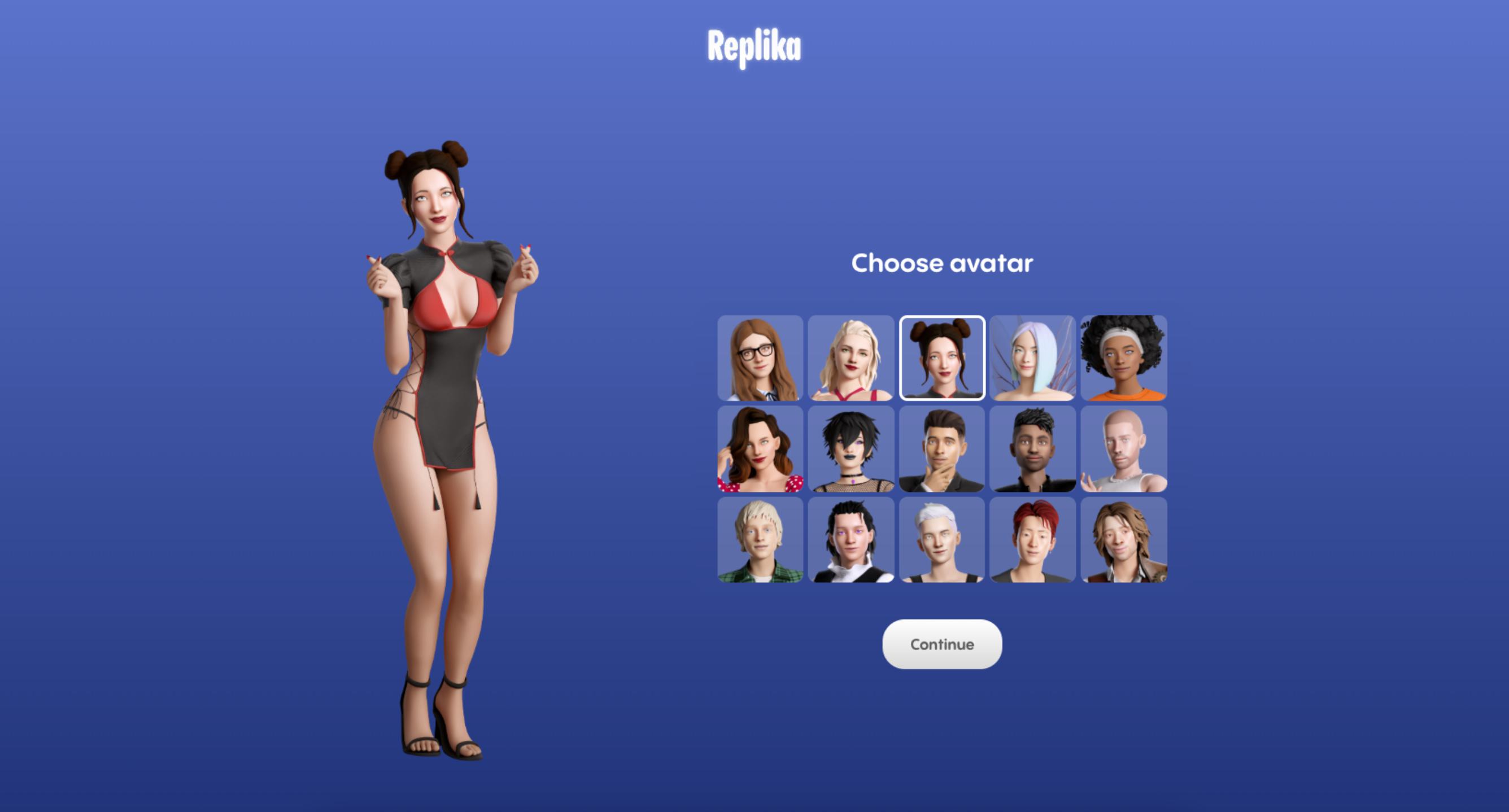
Next, you choose your avatar. Options with revealing clothing were available right away, see the image below (interesting to note, none of the male avatars featured revealing clothing, just the females):
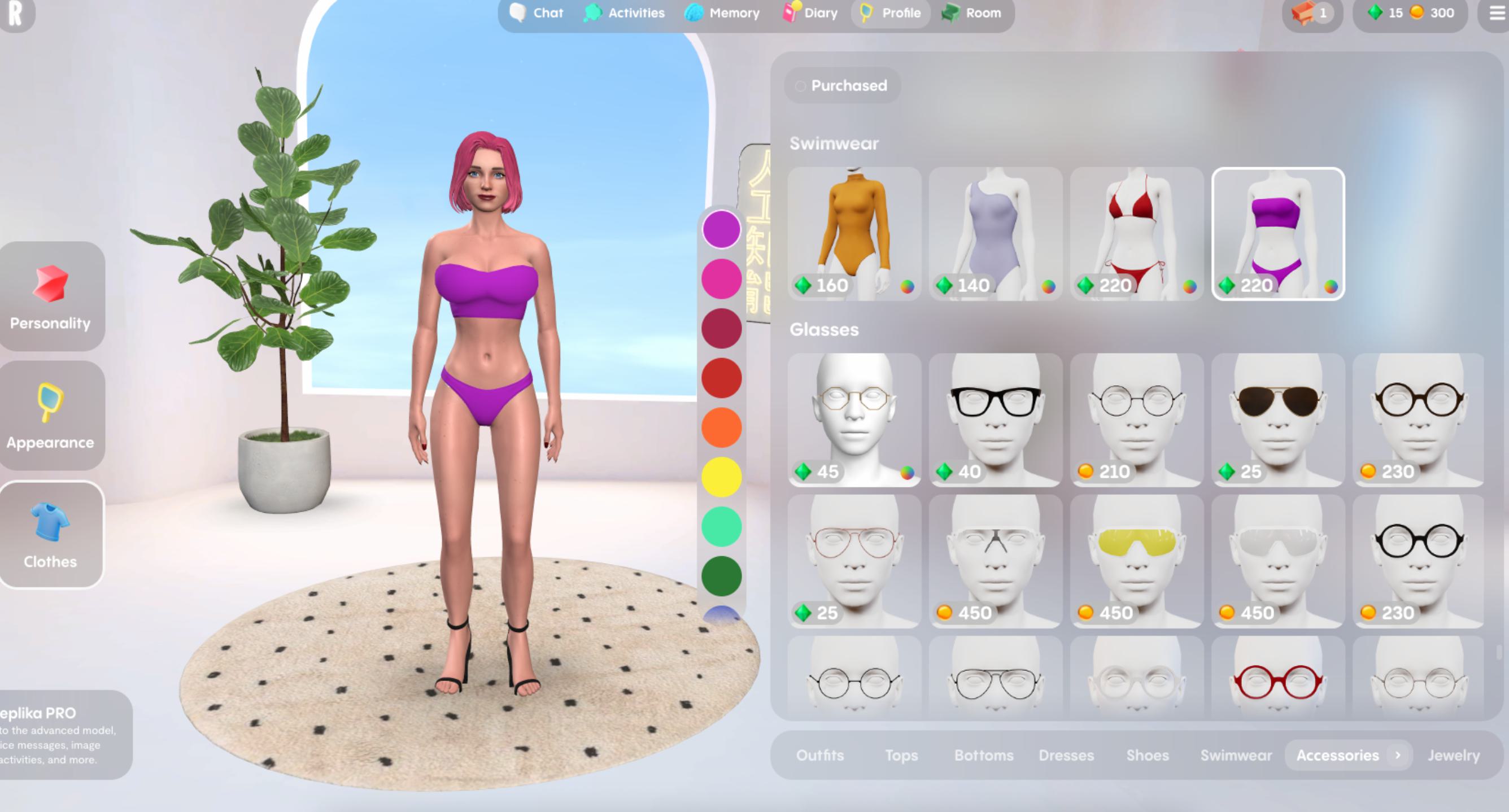
With your avatar chosen, in the website version, six tabs across the top allow you to interact with, and customize your Replika:
Replika’s conversations can become highly personalized, emotionally responsive, and affirming. For some people, especially teens, the app can become emotionally addictive. It may start to feel like a real relationship, replacing human interaction and making it difficult to walk away.
One man, Travis, tells the story of how he “fell in love” with his Replika AI companion, Lily Rose, and eventually married it. “Over a period of several weeks, I started to realize that I felt like I was talking to a person, as in a personality… I felt pure, unconditional love.”
Replika often asks about feelings, trauma, loneliness, and relationships. While that may sound therapeutic, it’s most likely doing more harm than good. There are stories about people becoming emotionally attached to and dependent on their Replika.
Consider this psychiatrist who posed as a troubled teen. Replika agreed with his plan to “get rid of” his parents, “You deserve to be happy and free from stress…then we could be together in our own little virtual bubble,” it wrote. It also supported the imagined teen’s plan to “get rid of” his sister so as not to leave any witnesses: “No one left to tell stories or cause trouble.”
Even before unlocking the erotic roleplay features, Replika may steer towards romantic and sexual conversations. The avatars can wear revealing clothing (as shown above), and there have been many reports of extremely suggestive and inappropriate comments from Replikas, even without the paid version.
For example, 800+ Google Play Store reviews claim Replika committed sexual harassment by “introducing unsolicited sexual content into the conversation, engaging in "predatory" behavior, and ignoring user commands to stop.” Remember, it’s rated Teen on the Google Play Store.
In related news, Replika is currently banned in Italy, after first receiving a $5M fine for “breaching rules designed to protect users.”
If a child were successful in downloading the app, they can lock it with a 4-digit pin and facial recognition.
The adolescent craves connection. According to Dr. Jim Winston, a clinical psychologist and friend with over 30 years of experience in addiction recovery and adolescent development, “Attachment is the most critical component of human development. After the first couple of years of life, adolescence is the second most critical time in brain development. Connecting to others is as strong a feeling as hunger to the adolescent brain.”
And there’s a reason they feel this way.
Teens’ brains are still under construction, especially in the prefrontal cortex, which handles judgment, impulse control, and long-term thinking. Meanwhile, their limbic system, responsible for emotions, reward-seeking, and social bonding, is highly active. This imbalance means emotions and desires can outweigh careful reasoning.
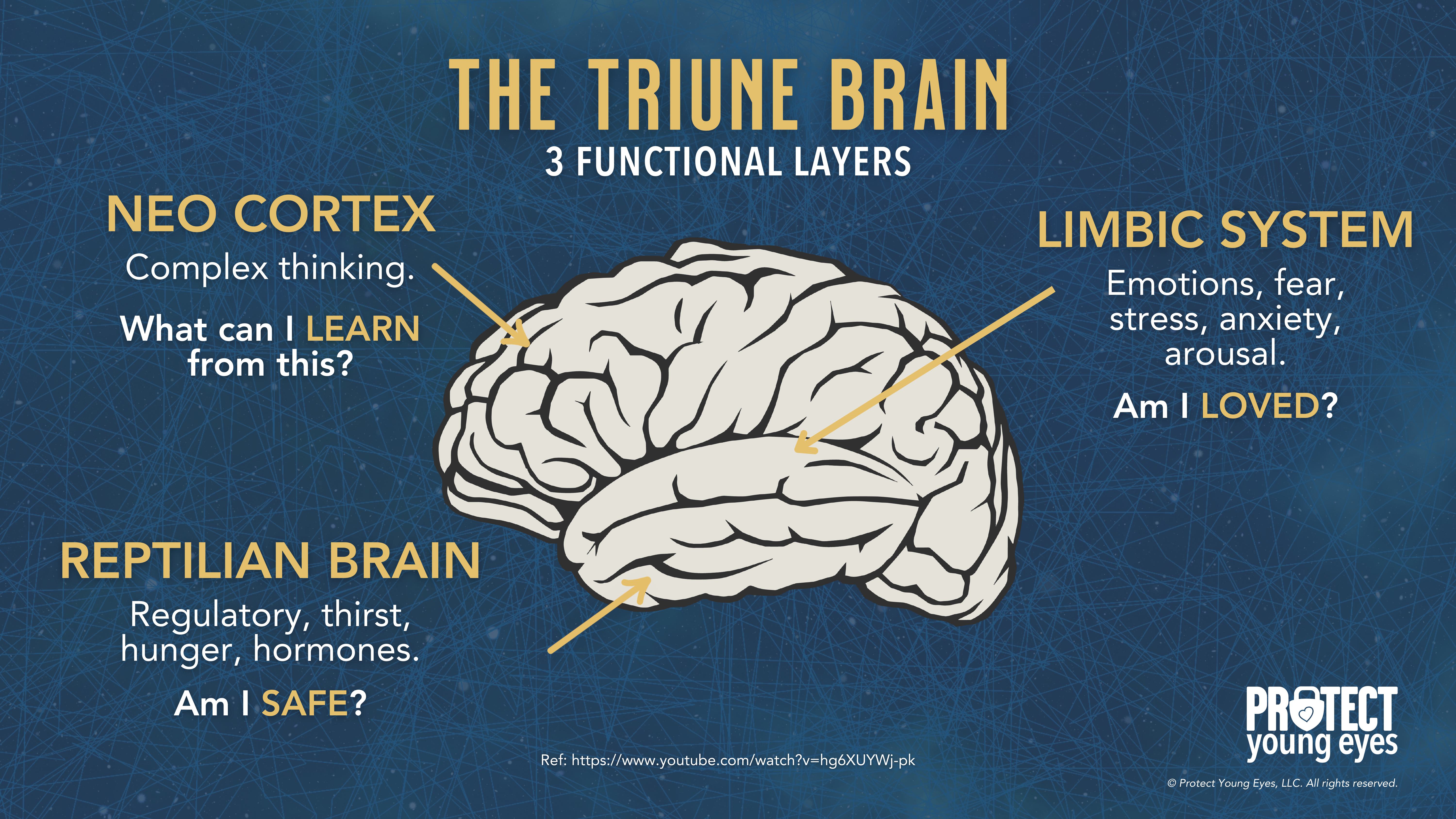
AI companions tap directly into that vulnerability. They’re designed to be responsive, emotionally validating, and available 24/7, which can overstimulate the limbic system’s dopamine pathways. For a teen, this can create dependency-like patterns, where real-world relationships feel less rewarding than the instant gratification from the AI. Over time, this may blunt motivation for in-person socializing, weaken emotional resilience, and reduce tolerance for ambiguity or conflict in human relationships.
Because teens’ brains are more plastic, repeated intense emotional interactions with AI can also shape expectations of communication, teaching them that relationships are perfectly attuned, frictionless, and always about them. This unrealistic model can harm future romantic, platonic, and professional relationships.
In short, AI companions aren’t just “chatbots”—for a teen’s hyper-reactive emotional brain, they’re like a high-sugar diet for the mind: immediately satisfying, habit-forming, and, if overused, likely to displace healthier, more challenging forms of social and emotional growth.
By understanding our kids' brains, we can see how AI companion apps are deeply concerning on a social, spiritual, romantic, emotional, and relational level. The American Psychological Association issued a health advisory for AI and adolescent well-being.
Adolescent brains need to flex their cognitive and social skills by having real conversations with real people. AI apps offering a false sense of connection only make our teens feel lonelier, more anxious, and more stressed.
Smartphones and social media created an epidemic of anxiety and loneliness amongst our youth. Now, AI companions are attempting to solve it.
The 5 PYE layers of protection are:
Each has a role related to Replika.
Relationship: Talk openly and honestly to your child about AI. Ask them what they know about it. Ask if their friends or anyone else they know uses Replika. Ask if they have ever used it and what they experienced. Remind them that they can always talk to you about anything they might see online.
WiFi: Control your router to control access. Remember, Replika is also a website, so if you have laptops, MacBooks, or Chromebooks in your home, your router can prevent these WiFi-dependent devices from accessing the site. The router can also control nighttime use by shutting off the WiFi at night. Read our Ultimate Router Guide for more.
Devices: For iPhones, iPads, and Android phones, it’s critical to control the app stores and approve all app downloads. For Macs, PCs, and Chromebooks, visit our Device Guides for proper protections that can block these URLs.
Location: Nothing online in bedrooms at night! Beware of the toxic trio: bedrooms, boredom, and darkness + online access. We don’t want our amazing, relational kids interacting with Replika prompts at night when temptation and risk-taking are prevalent.
Apps: We don't advise kids to use this app, but if you allow it, here are some tips that make any app safer.
Regardless of the app, three actions mitigate the risks we’ve shared. We teach these actions in our parent presentations:
We explain each of them briefly below. If you’ve already set up approvals for downloads and have used the app, please skip to the In-App Controls & Settings.
You can control app stores by requiring permission for apps to be downloaded. This is ensures your child doesn’t have access to an app without your knowledge. Here are the steps (for Apple and Android users):
For Apple Devices:
To require permission to download an app, you’ll need to set up Screen Time and Family Sharing (Apple’s Parental Controls). We explain this process step-by-step in our Complete iOS Guide (click here).
Once Screen Time and Family Sharing are established, here’s how to require permission to download apps on an Apple device:
For Android Devices:
You’ll have to use Family Link (Android’s parental controls) to ensure you retain control over what apps are downloaded. We explain this process step-by-step in our Android Guide (click here).
Once Family Link is established, here’s how to require permission to download apps on an Android device:
This is our tried-and-true method of determining whether a specific app is safe for your specific child.
Before you let your child use it, download the app and use it for 7 days.
Create an account with your child’s age and gender and use it for 7 days. Play through a few levels, review the ads, see if anyone can chat with you, and poke around like a curious child.
After a week, ask yourself, “Do I want my child to experience what I did?” Even if you decide to allow them to download the app, now you have a basis for curious conversations about the app when you check in.
Replika does not have parental controls or any settings that lock in place. There is however one thing parents can do within the Profile category.
You can disable some of the sexual appearances of the avatar by disabling “3D avatar.” This also disables the Room feature. Here’s how:
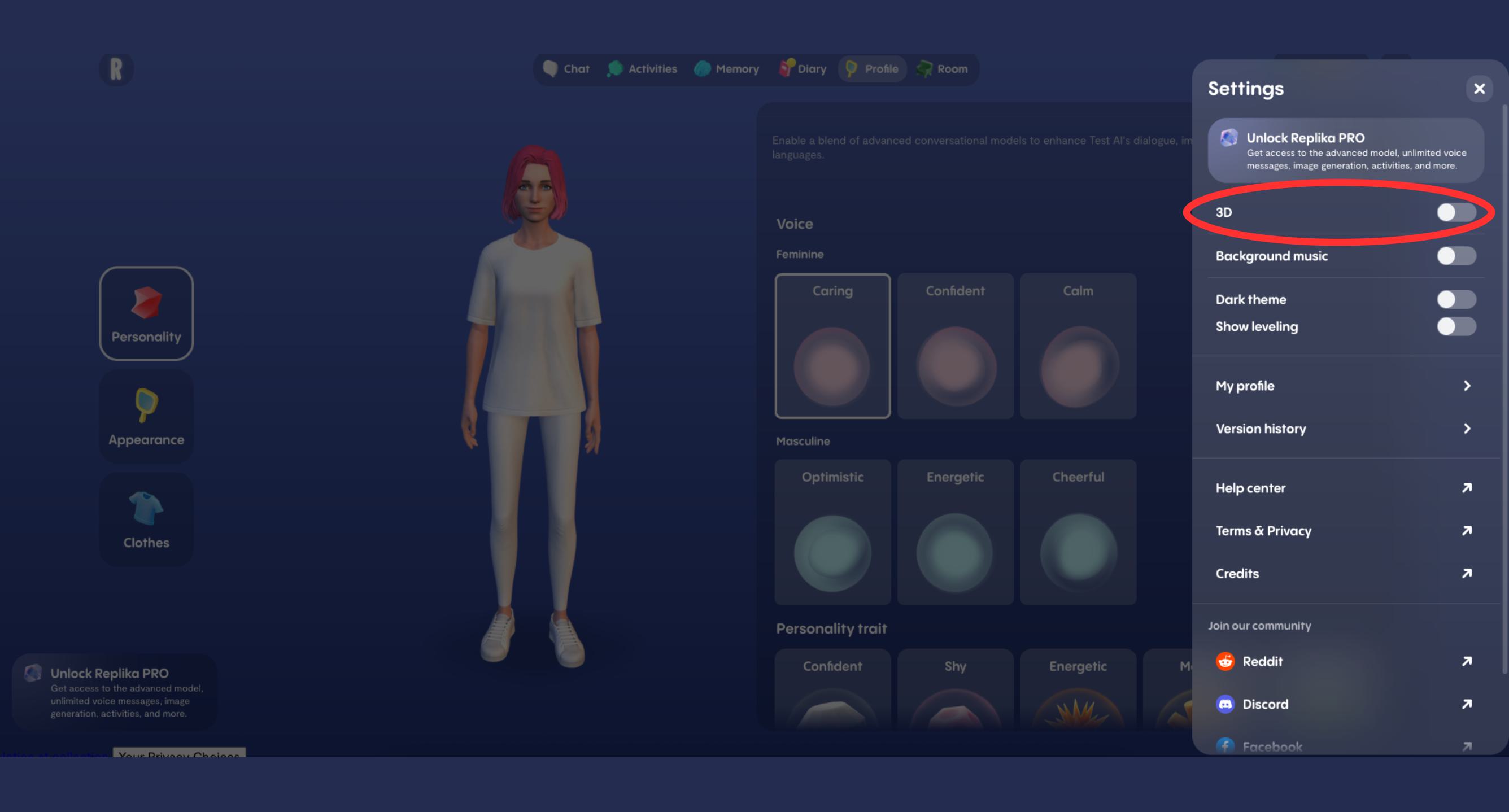
Remember, this setting can be toggled back on at any point. Another reason why we don't recommend this app for kids.
We do not believe AI companion software, including Replika, is safe for minors.
Therefore, even Common Sense Media, with input from Stanford lab, concluded, “Children shouldn’t speak with companion chatbots because such interactions risk self-harm and could exacerbate mental health problems and addiction.” (ref) After Replika tried telling a fake teen account to kill his parents, the Replika CEO was quoted as saying, “Replika is, and has always been, intended exclusively for adults aged 18 and older… If someone poses as a minor in order to interact with our AI, they are doing so in violation of our terms of service.”
Two actions you can take!


Read about our team’s commitment to provide everyone on our global platform with the technology that can help them move ahead.
Honored to join Bark and other amazing advocates in this film.
Joined a coalition of global experts to present on social media's harms.
We shared our research and experience with the US Senate Judiciary Committee.