Empieza aquí
Acerca de
Hablando
Contáctenos
Únete a la mesa
Curso para padres
Recursos
Spanish
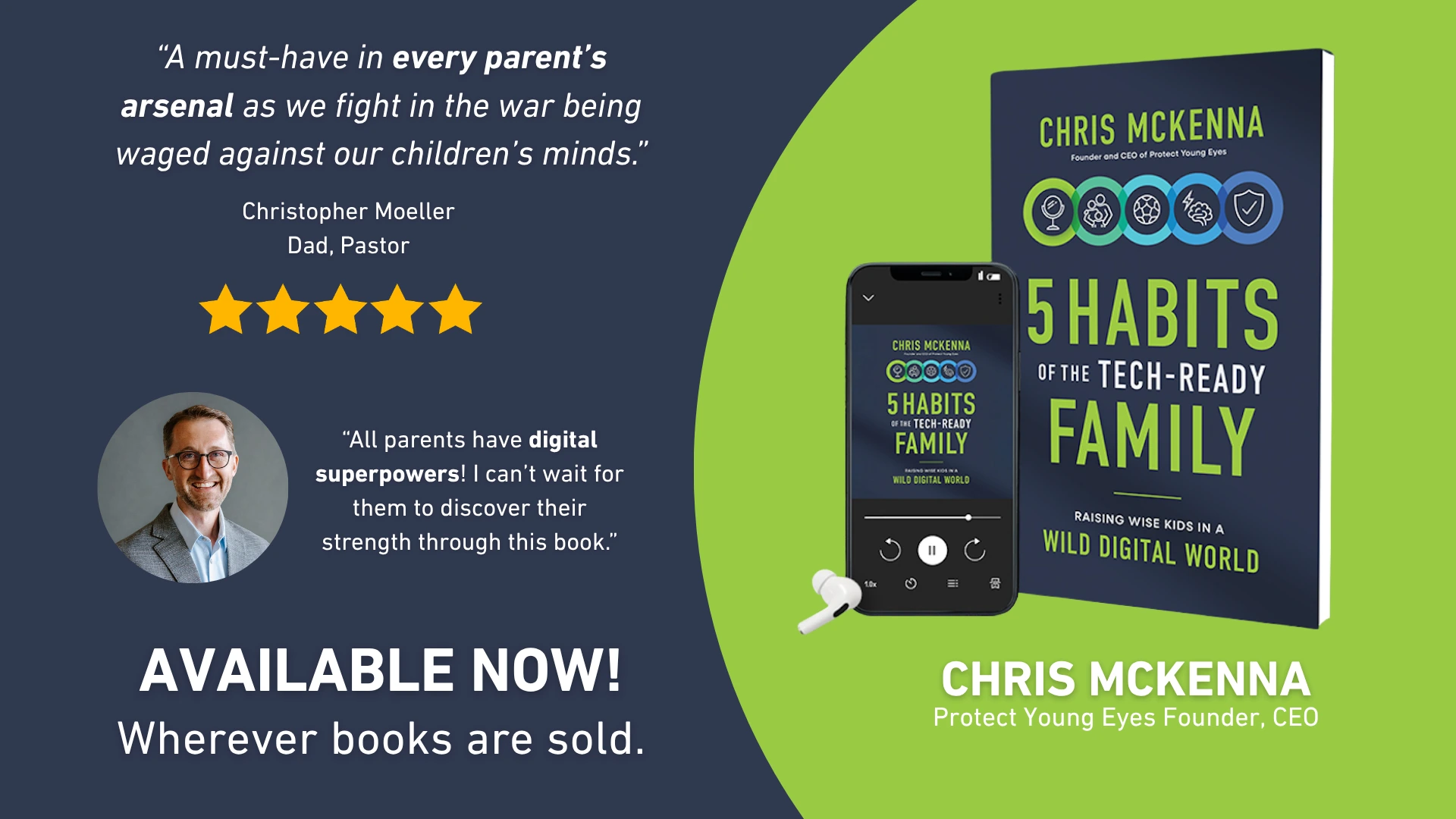
Order my debut book! - 5 Habits of the Tech-Ready Family 📑



Here at Protect Young Eyes, we talk to thousands of parents every year, at churches, in school auditoriums, and even sometimes online, and a very common thing we hear is that parents often don’t know where to start when discussing online safety.
So, we want to share some tips on how to talk to your kid about online safety.
I know it feels easier to wait until your kids are older. To let them have just a little more childhood before you introduce the hard stuff. I get it. But the data tells a different story.
According to Thorn's 2024 Youth Perspectives on Online Safety report, one in three boys between the ages of 9 and 12 reported having an online sexual interaction that year. Not 16-year-olds. Nine-to-twelve-year-olds. Kids who are still in elementary school. Kids who just want to play Roblox and Minecraft with their friends.
But here's the part that actually gives me hope: a 2025 study by the Family Online Safety Institute found that nearly nine in ten children say they feel comfortable talking to their parents when something online makes them feel unsafe. Nine in ten! Your kids want to come to you. They just need to know the door is open.
Your job is to make sure that you’re a safe space, well before something happens.
The single biggest mistake parents make is waiting for something to go wrong before they talk about what could go wrong.
I say this from experience, both as someone who has worked in this space for years and as a parent myself. If the only time you bring up online safety is after your kid has already stumbled into something, they're going to associate these conversations with shame, punishment, and fear. That's not what we want.
We want them to associate coming to us with safety.
So start early, and start casually. You don't need to sit your child down for a "big talk" with the gravity of a college admissions interview. The best conversations happen in the car, on a walk, while you're folding laundry together. Low pressure, low stakes, but high impact.
Try something like:
That last one matters more than you might think. Show genuine curiosity about their digital world, not just suspicion. When they know you're interested in the good stuff too, they're more likely to bring up the hard stuff.
Online safety isn't a one-time conversation. It's a series of conversations that grows with your child. Consistently, every day in small ways. Here's a rough guide:
Ages 4–8: Focus on the basics. Help them understand that not everyone online is who they say they are. Teach them that if anything online makes them feel scared, confused, or uncomfortable, they should come to you right away, no questions asked, no punishment. Instruct them to “Put it down, and tell someone” (that someone being you). This is the same phrase we use during our live presentations with Kindergarten - 5th Grade.
Ages 9–12: This is the age when online risk often accelerates, and it's also when kids start wanting more independence. Talk specifically about who can contact them in games and apps, and what to do if a stranger asks personal questions or tries to move a conversation to a private channel. Make sure they know what "grooming" looks like in age-appropriate language, adults who seem too interested, who offer gifts, or who ask them to keep secrets from you. Instruct them to “Put it down, and tell someone” (that someone being you).
Ages 13-17: This age group often uses social media, may have been exposed to pornography (here’s how to react), can be under pressure to send an inappropriate image, is subject to sextortion, and faces the permanence of a digital footprint. Reports of financial sextortion, where teens are coerced into sharing images and then blackmailed for money, jumped from roughly 14,000 reports in the first half of 2024 to over 23,000 in the first half of 2025, according to the National Center for Missing and Exploited Children. While these cases might sound extreme, they happen often and to good kids. And truthfully, it’s not their fault. Sextortion is a crime that they are victims of. The sooner an adult gets involved, the safer it is for them. Talk about it before someone tempts your kid to make a mistake. Do your best to create a safe enough space so that your child will come to you if something happens.
Here’s more help on how to have age-appropriate conversations with young kids:
When speaking with parents, the first habit we teach is Model the Right Behaviors, which leads our 5 Habits for Creating a Tech-Ready Home (order our book!). Our children often look to us and learn from us in many ways, including how we use technology.
Your voice is the most powerful tool in your child's digital life, more powerful than any app or parental control we could ever recommend (though those matter too!).
But here's what I want you to take away from everything above: the goal of these conversations is not to scare your kids. It's to make them feel known, prepared, and loved.
When your child encounters something harmful online, and statistically, they likely will, the most important factor in their recovery is whether they have a trusted adult they can run to. That trusted adult should be you.
So here's my challenge for you today: before this week is over, find one low-pressure moment with your child and ask them one question about their online life. Not an interrogation, and no condemnation. Just curiosity and care! Listening and asking questions will help them see that you are a safe person to talk to about what they experience online.
You've got this, parents. One conversation at a time!

¡Dos acciones que puedes tomar!
Lea sobre el compromiso de nuestro equipo de proporcionar a todos los usuarios de nuestra plataforma global la tecnología que puede ayudarlos a avanzar.
Es un honor unirme a Bark y a otros increíbles defensores en esta película.
Se unió a una coalición de expertos mundiales para presentar sobre los daños de las redes sociales.
Compartimos nuestra investigación y experiencia con el Comité Judicial del Senado de los Estados Unidos.