Empieza aquí
Acerca de
Hablando
Contáctenos
Únete a la mesa
Curso para padres
Recursos
Spanish
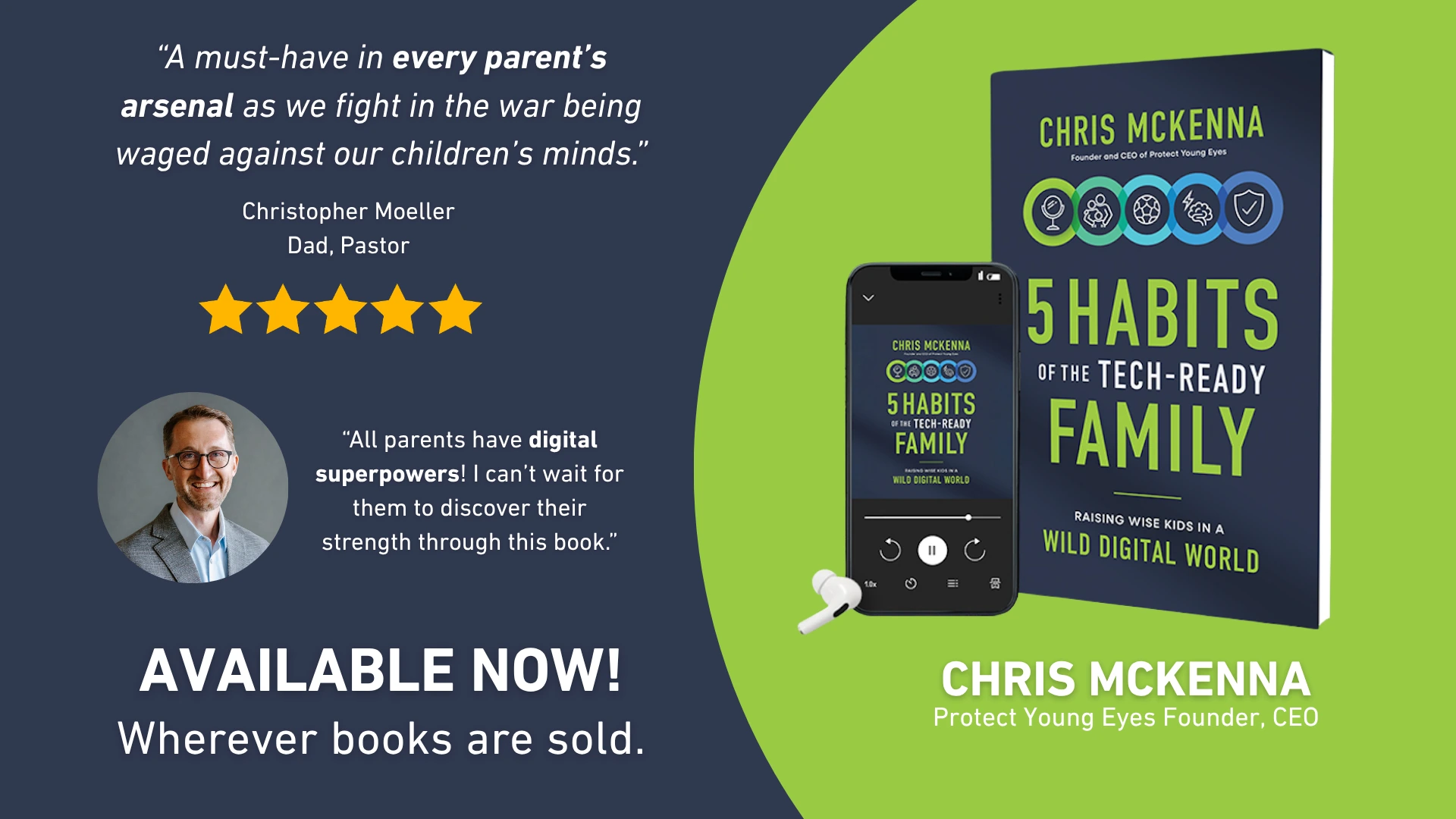
Order my debut book! - 5 Habits of the Tech-Ready Family 📑


Within the span of a single week, I found myself having the same heartbreaking conversation twice, with two different moms, in two different Instagram DMs. Different families. Different churches. Different boys. But the same raw, desperate pain was coming through the screen.
The first message read: “Chris, I saw you speak at our church, and I’m desperate for help. I feel like a failure as a mom. My son has been looking at porn. He’s only 10. It’s hard for me to look at him. Now I think he’s damaged. Can someone from PYE help me?”
I did something I rarely do: I offered to talk on the phone. We simply can’t speak with everyone personally, but this one felt different. Somewhere in the middle of our conversation, I felt prompted to pause her and say, “It feels like I need to remind you of something. Just remember, he’s still your amazing son.” She burst into tears. Apparently, it was exactly what she needed to hear.
The second message arrived just days later: “I just caught my 9-year-old looking at P*rnhub. I’m totally heartbroken. How do we recover from this? I have failed him. He was my innocent boy. I feel betrayed. I look at him differently now because he’s not as innocent.” After we talked through some practical steps and technical changes she could make at home, I said, “Above all, please, please remember this: he is the victim. He is still your amazing son.” There was a long silence on the other end. Then, quietly: “Thank you. Thank you. Yes, he is.”
I don’t know who needs to read these words right now. But if you have recently discovered your child viewing pornography, or anything else inappropriate online, this is the most important thing I can say to you:
Your child is not damaged. Your child is not ruined. Your child is not suddenly “less innocent.” He is still your amazing son. She is still your amazing daughter.
When young children encounter pornography, several things are almost always true. They were curious. They were exposed accidentally, or they followed a suggestion from a friend, or they searched a word they didn’t fully understand. They didn’t grasp the weight of what they were clicking on.
We are raising children in an environment where the distance between innocent curiosity and deeply explicit content is a single tap, one typo, one auto-suggestion in a search bar, one link shared in a group chat at school. Their brains are not developmentally equipped to process what they’re seeing. And the pornography industry is not designed for mature adults who stumble across it, it is aggressively optimized, endlessly searchable, and completely accessible to any child with a device and a Wi-Fi connection. This is not a fair fight.
Here’s another resource from us that might be helpful: My Kid Has Seen Porn. Now What?
Pornography is harmful. That is true, and we should never minimize it. But there is something that can be equally damaging in the immediate aftermath of discovery, and it has nothing to do with what was on the screen. It’s what happens inside your child’s heart when they look at your face and believe: “I’ve disappointed my parents. I’m bad. I’m gross. Something is wrong with me. I can never tell them if this happens again.”
Shame is the soil where secrecy grows. And secrecy is where harmful patterns take root and deepen over time. Your reaction in the first 24 hours after discovery matters more than almost anything else that follows. The tone you set in that initial moment will determine whether your child sees you as a safe place to run to or a reaction to hide from.
Before filters. Before lectures. Before the consequences of any kind. They need reassurance. They need to hear, in plain and unhurried words: “I love you. You are not in trouble. We are going to figure this out together. There is nothing you could ever see online that would change how I feel about you.”
That needs to be true even if they searched for it intentionally. Even if they lied about it at first. Even if you’re still processing your own shock and grief in that moment. They are still your child, and they need to know that before anything else happens.
This doesn’t mean there are no conversations to be had or changes to be made. After reassurance comes thoughtful action. You can strengthen device rules, move screens into public spaces (here’s why), add filtering or accountability software, remove private browsing access, delay all addictive tech, and increase the frequency of honest conversations. All of those things matter. But none of them will work the way you hope if your child walks away from that first conversation feeling like your love for them quietly shifted. Correction without connection creates distance. Connection before correction creates safety.
Parents need to understand what is actually happening neurologically and developmentally when a young child encounters this content. Their developing brain is being overstimulated by something it has no framework to process. Their still-forming understanding of relationships and human connection is being distorted before it’s had a chance to develop healthily. Their natural, God-given curiosity is being hijacked by an industry that profits from it.
And here is something that often surprises parents: many children don’t go looking for pornography the first time it enters their lives. It finds them, through pop-ups, suggested searches, friends, older siblings, gaming chats, and social media links. The path from an innocent search to explicit content can be shockingly short, and a child can find themselves staring at something deeply disturbing before they’ve had a single second to make a real choice. We have to be careful not to label as perversion what is very often early, unwanted exposure. These children need a parent who can hold their own emotions steady long enough to be the safe place their child desperately needs.
It is natural to grieve when something like this happens. It is natural to feel angry at the culture, at the algorithms, at an industry that has made this so easy and so inescapable. It is even natural, in a raw human way, to feel a sense of betrayal. Those feelings are real, and they deserve space. But we have to be deeply careful about the words we speak out loud in front of our children in those moments, because when a child hears “you were my innocent boy,” what they internalize is not the love behind those words. What they hear is: “I am no longer good.” And that belief, left unaddressed, can be far more damaging in the long run than the exposure itself ever would have been.
If you are the parent sitting in this moment right now, take a breath. You did not fail. You are parenting in a digital environment that did not exist when you were nine years old, in a world that is moving faster than any parenting book has been able to keep up with. The fact that you are this broken up about it, the fact that you care this deeply, tells me something important about you. You are a loving parent. And your child is still your amazing child.
No matter what happens to your children online, whether it was their fault or not, whether it was accidental or intentional, whether it happened once or more than once, make sure they know, in words they can hold onto, that there is nothing they could ever do to change how you feel about them. That you love them exactly the same. That there is nothing wrong with them. That they are not broken, and they are not ruined. That they are, and always will be, your amazing son or daughter.
We get one precious childhood. Let’s protect it with truth, with boundaries, and with unwavering love.

¡Dos acciones que puedes tomar!
Lea sobre el compromiso de nuestro equipo de proporcionar a todos los usuarios de nuestra plataforma global la tecnología que puede ayudarlos a avanzar.
Es un honor unirme a Bark y a otros increíbles defensores en esta película.
Se unió a una coalición de expertos mundiales para presentar sobre los daños de las redes sociales.
Compartimos nuestra investigación y experiencia con el Comité Judicial del Senado de los Estados Unidos.